‘Resonant Matter’
Group Exhibition, Collision Gallery, Toronto.
April, 2025
“How does distance look?” is a simple direct question. It extends from a spaceless
within to the edge
of what can be loved.”
-Anne Carson, Autobiography of Red
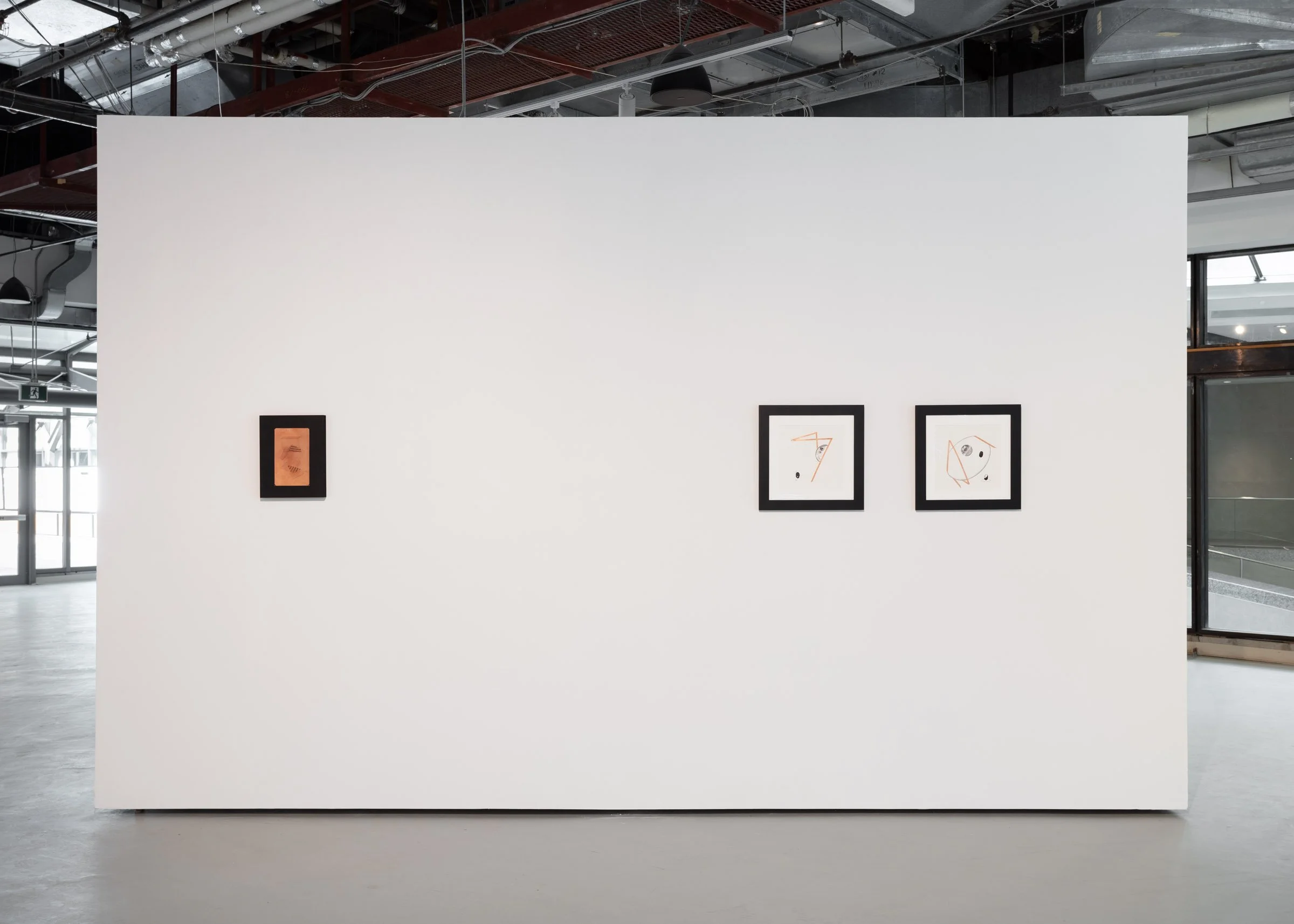
How does distance look? Is it the manifestation of an echo? Does it get weighed down by gravity? Is it obscured by shadow? Or fragmented by perception? There are, perhaps, no clear answers to the question of distance. In Resonant Matter, artists Naomi Dodds, Sofia Escobar, Maria Esthela, and Aline Setton venture into the threshold between places and report back what’s there. The works in this exhibition explore how migration, memory, and materiality converge through abstraction, light, and site, emphasizing the artists’ shared histories of migration to, from, and within Canada.
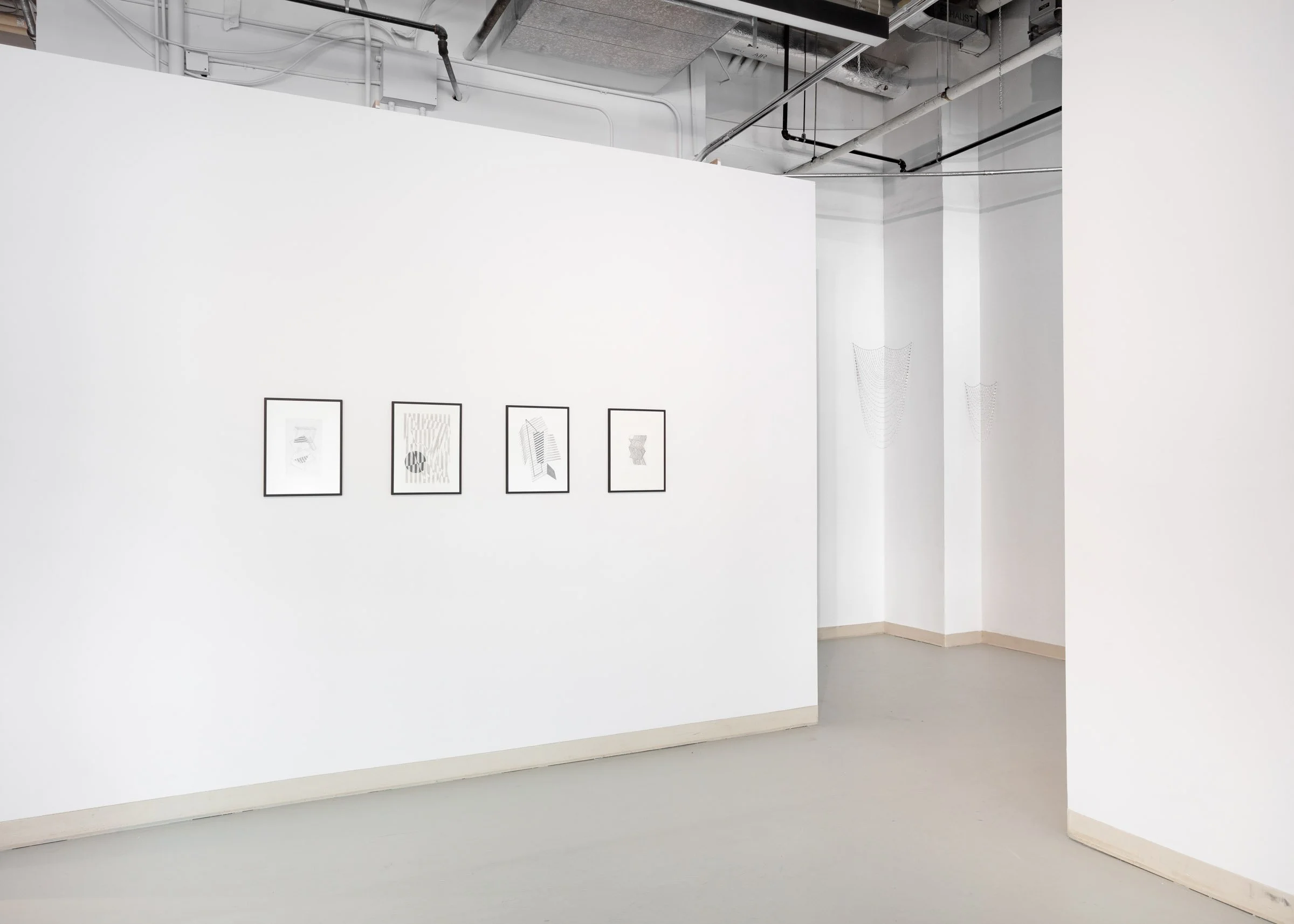
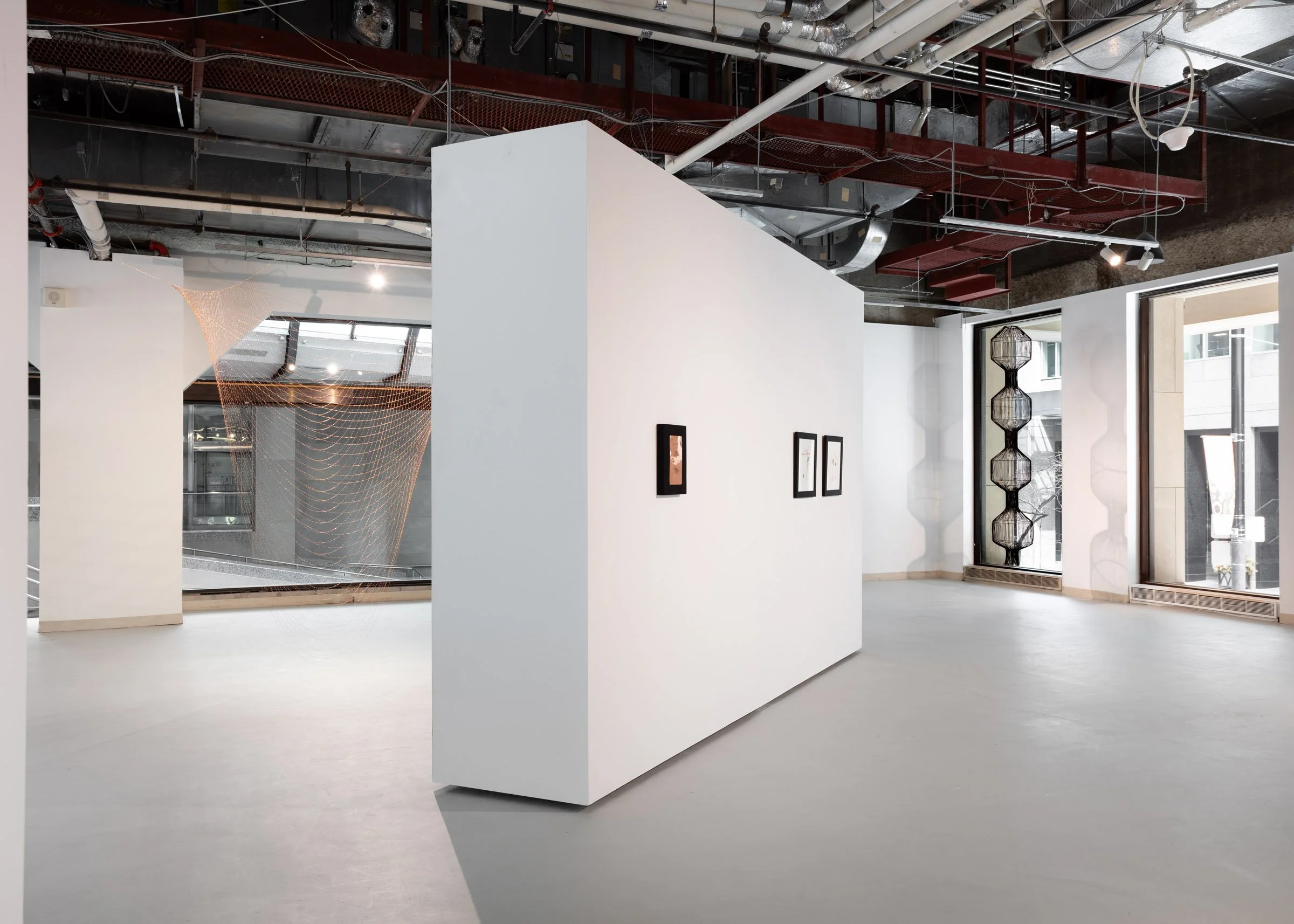
Influenced in various ways by the Light and Space movement, each artist approaches a visual description of distance through fragmented shifts in light, shadow, sound, and movement—foregrounding the body’s relationship to its environment. The artworks trace how personal histories of migration and cultural dislocation surface not through direct representation, but through an engagement with tension: between material and metaphor, weight and lightness, concealment and revelation.
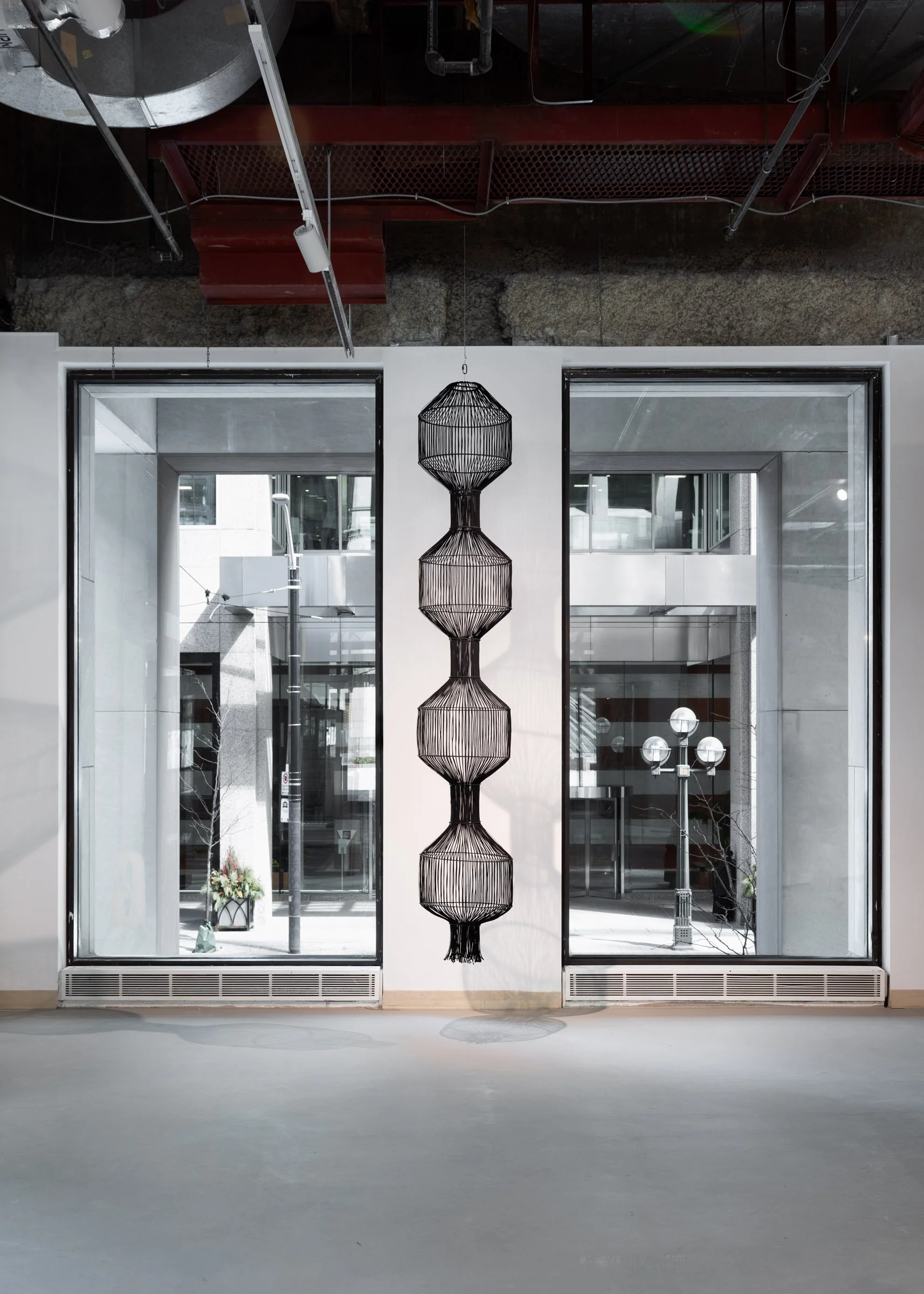
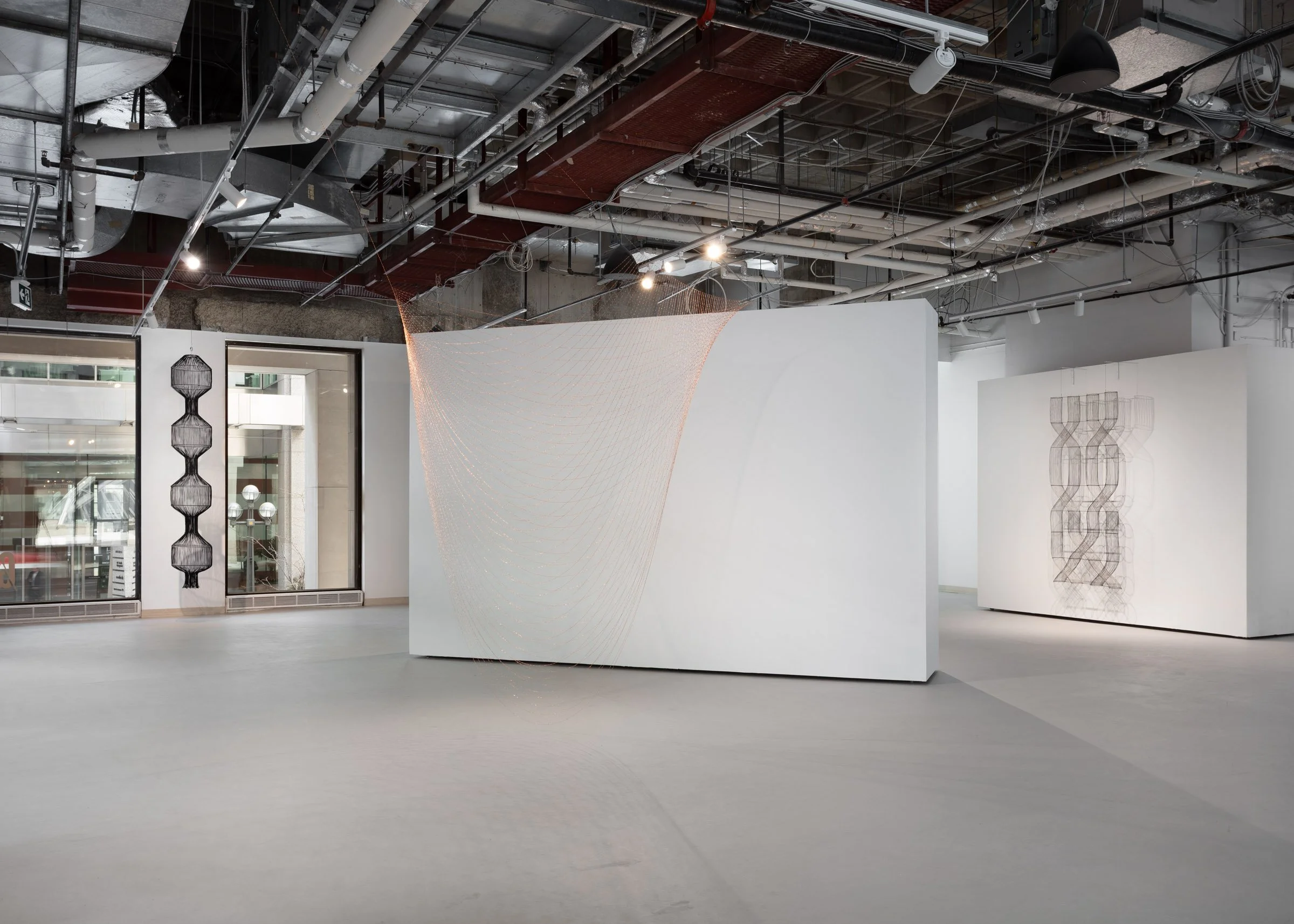
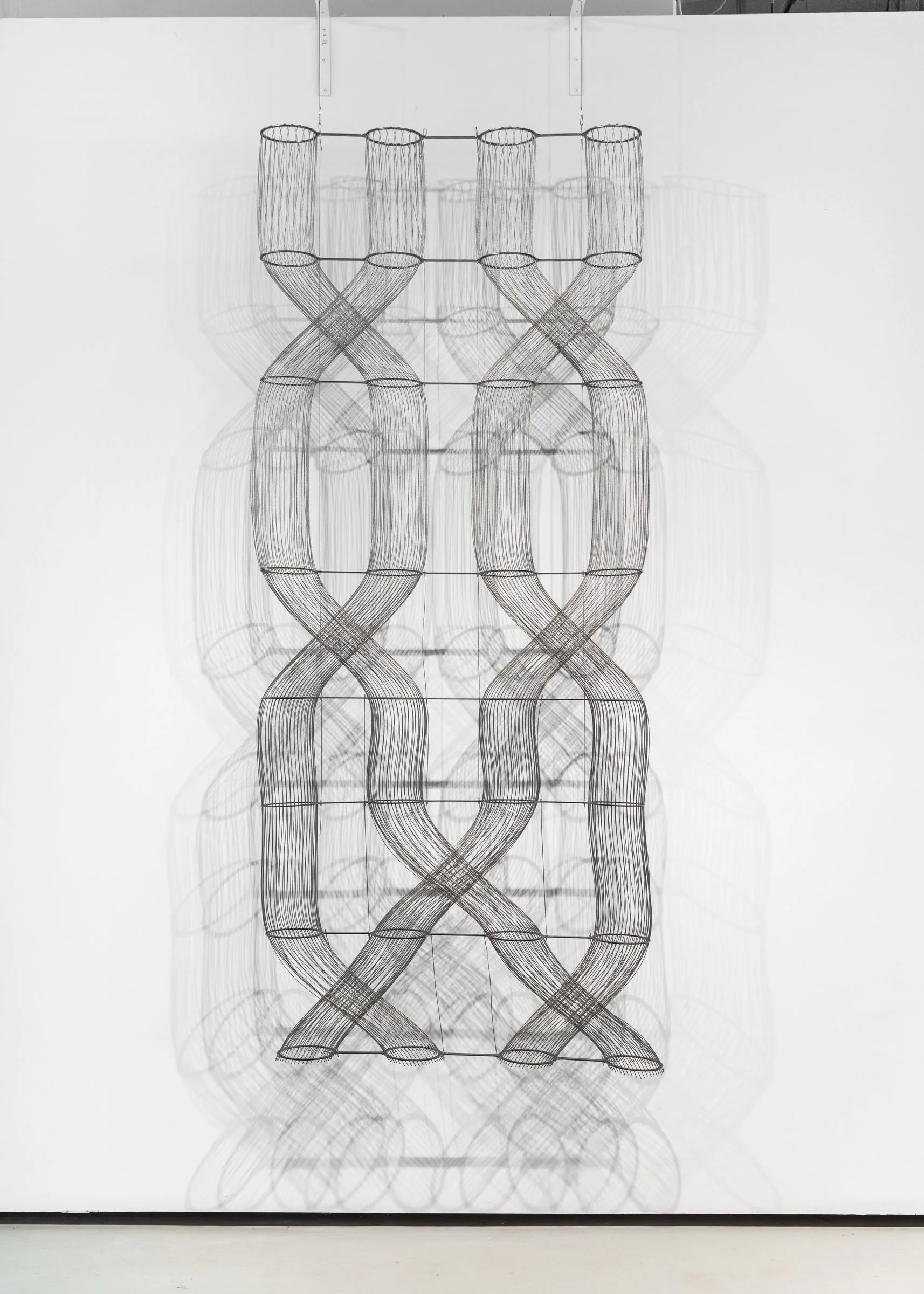
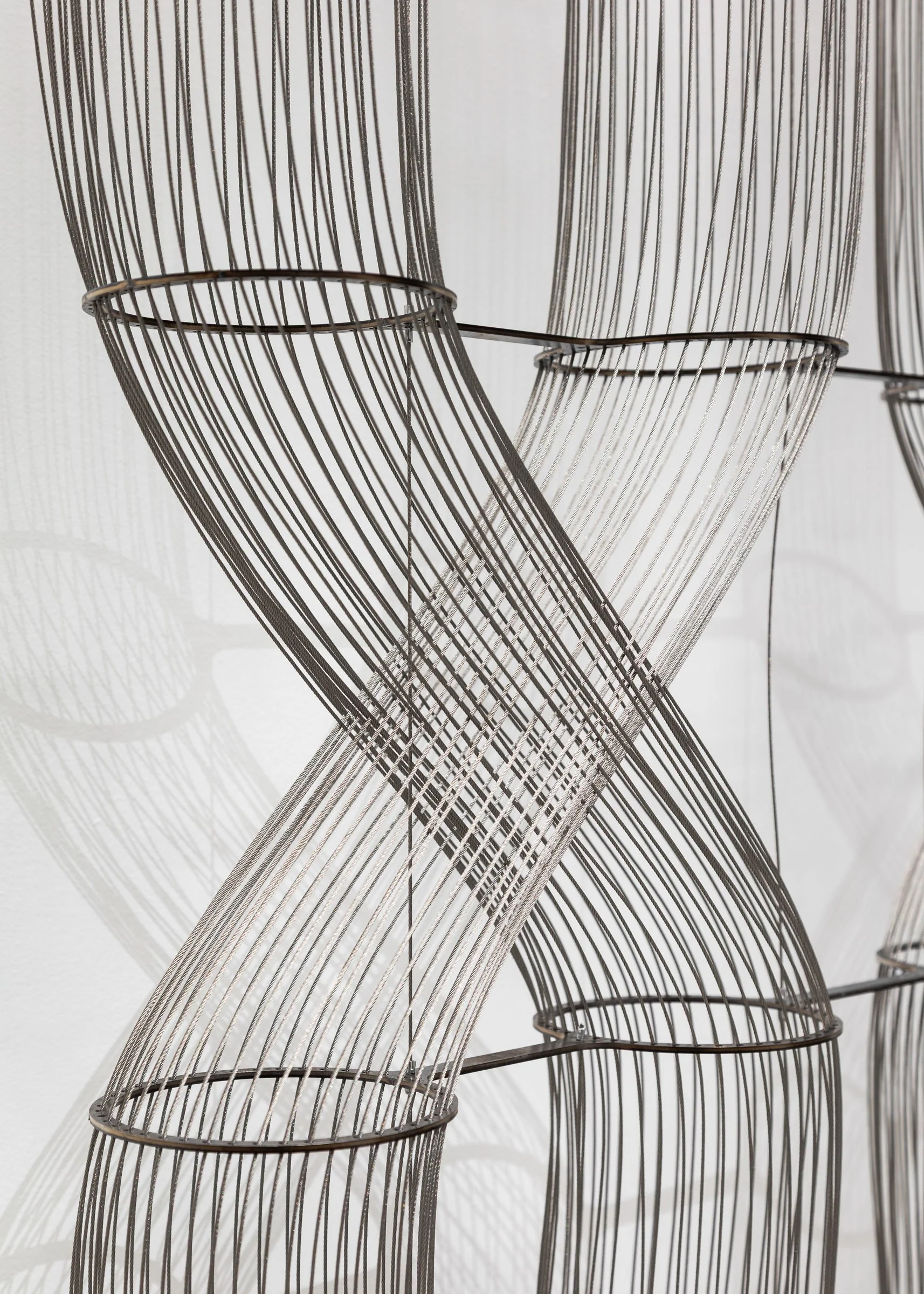
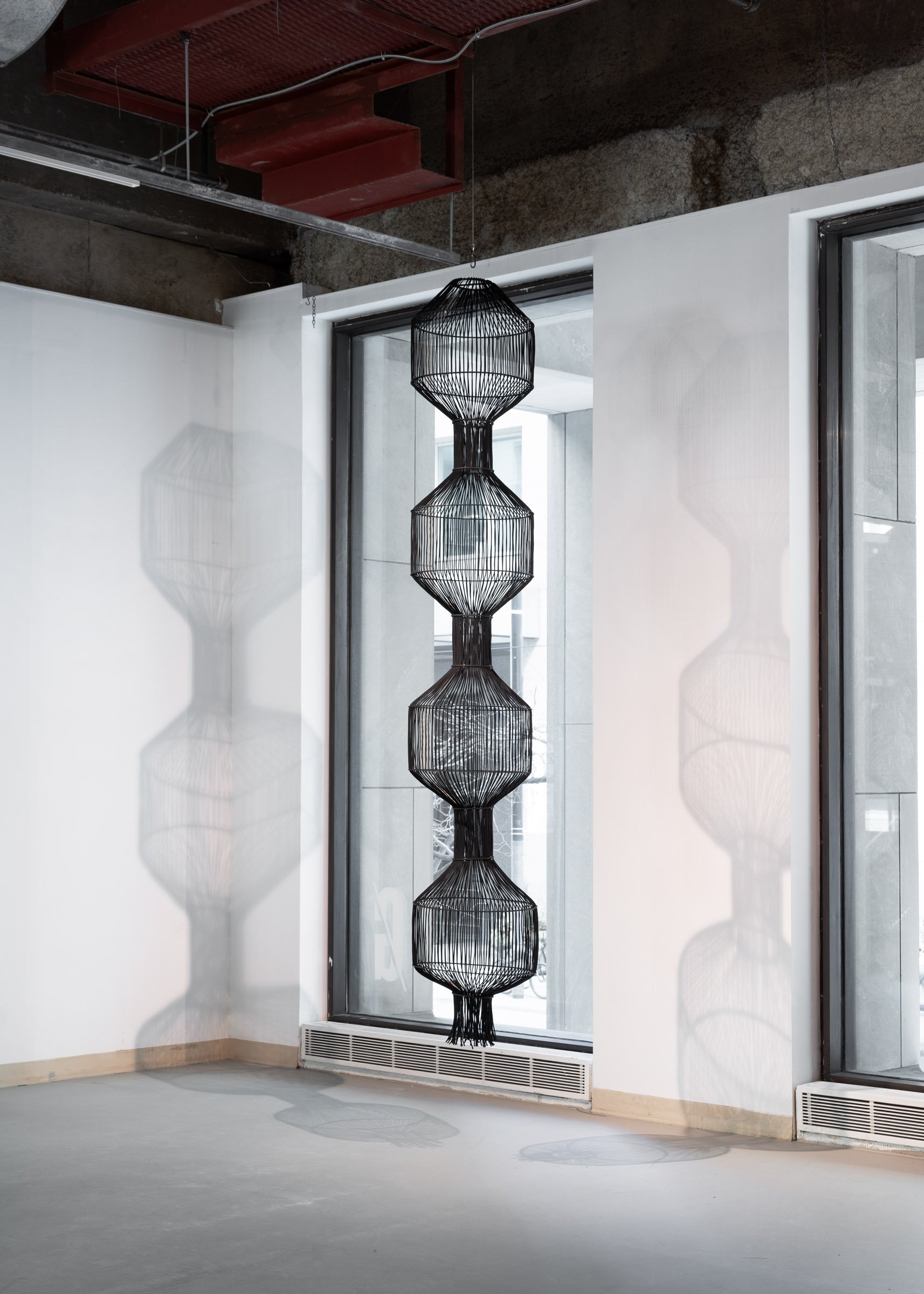
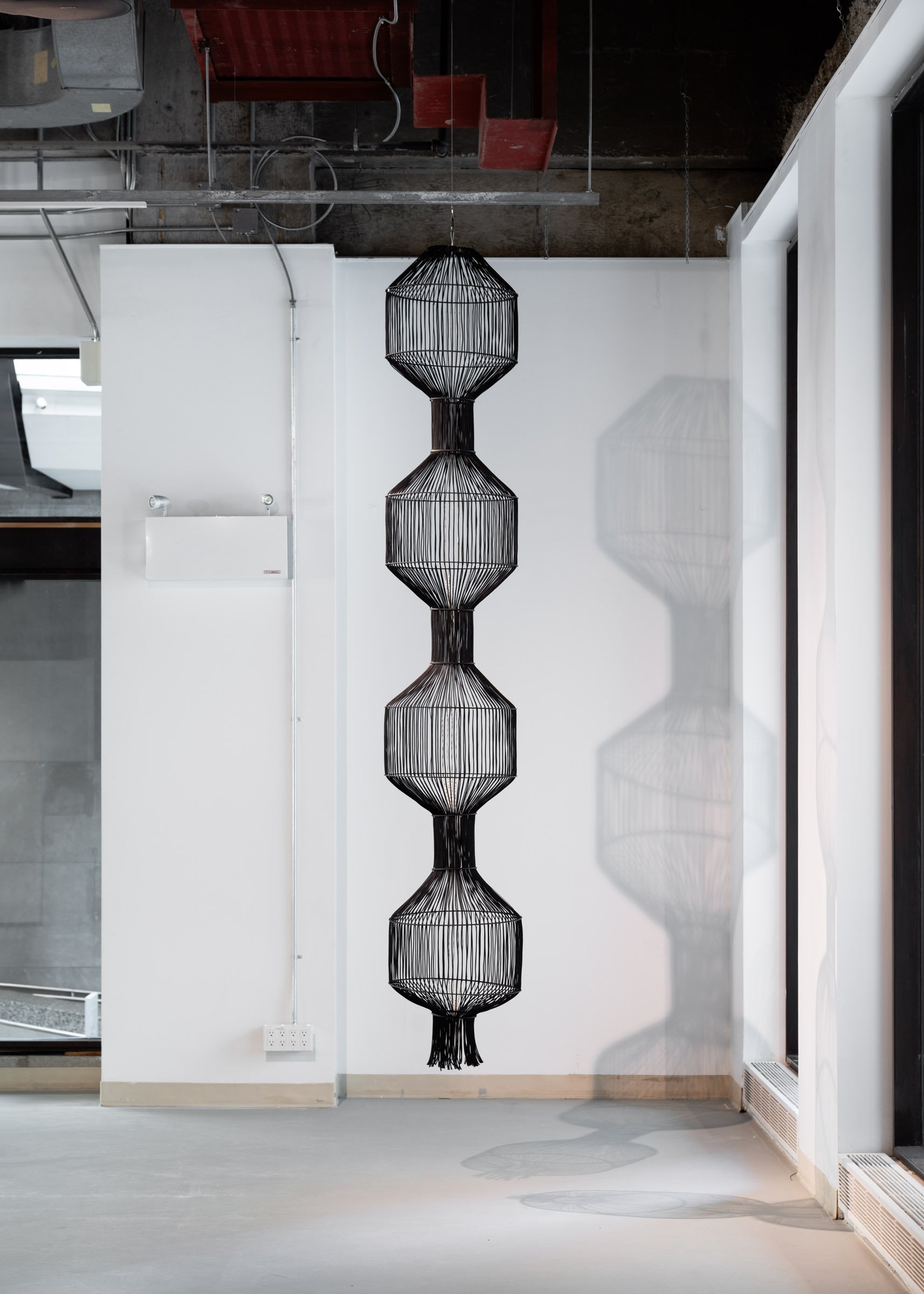
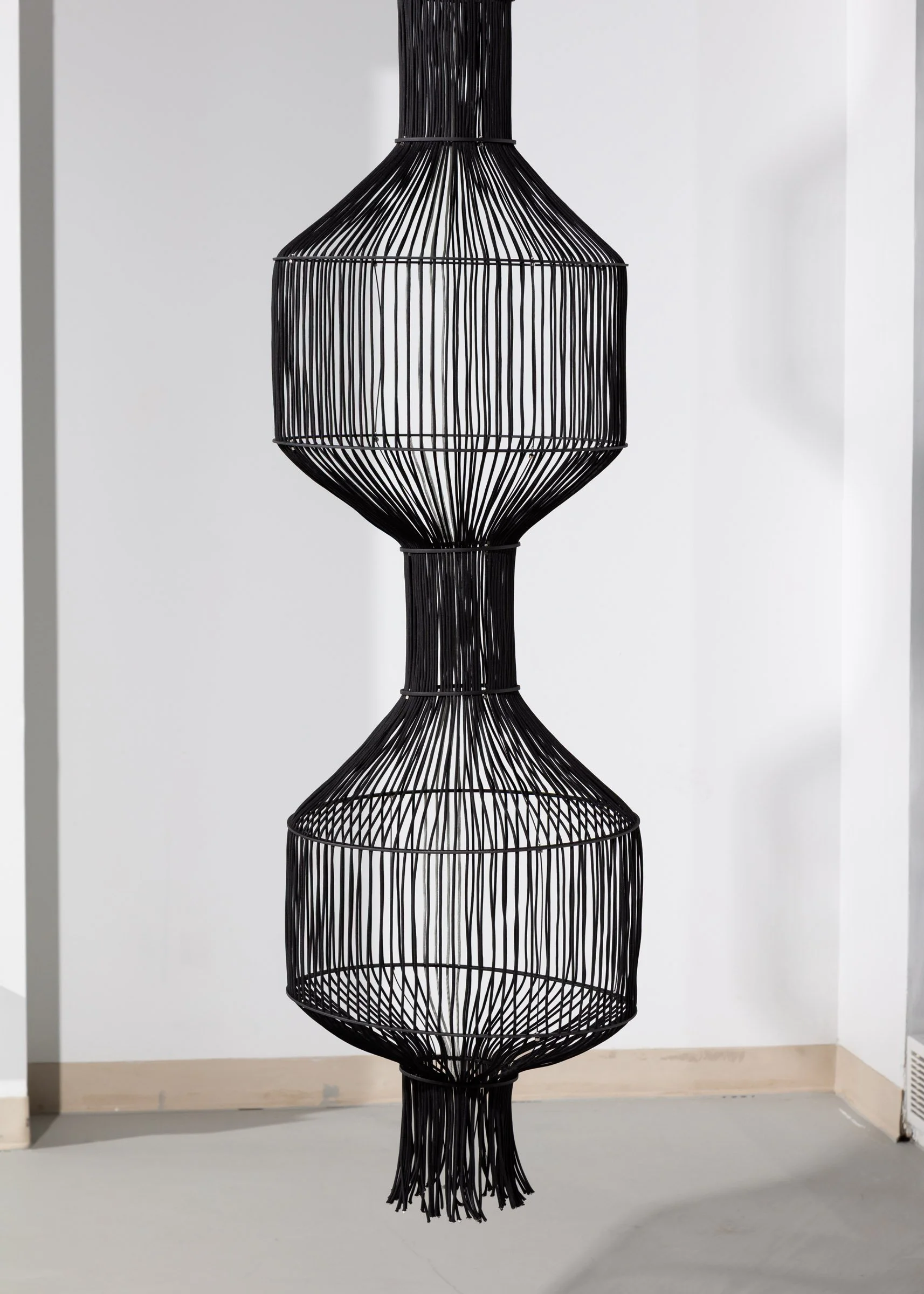
Working with aircraft cable and paracord, Escobar adapts Andean textile traditions into illusory sculptural forms that consist of a single symmetrical element repeated to produce a continuous rhythmic line. Using aircraft cable—typically associated with architecture—Double Loom teeters between traditional weaving practices and modern industry, reflecting the adaptability inherent in the process of resettlement. Form & Matter reimagines the vase form, typically associated with ceramic traditions, using paracord to weave a ghostly impression of an endless column of diamonds and cylinders. Unlike a vase, the work can hold only light and shadow, resisting solidity.
Resonant Matter reminds us that the impact of migration often lives in the unnoticed details: the shape of a stairwell, the feel of a woven line, the way sound bounces off a wall. Taken as a whole, the works in this exhibition draw our attention to the subtle ways that new environments are absorbed, negotiated, and remembered.
Erin Storus